Yes, you can build with bamboo in India, and people have for centuries. Bamboo construction uses treated poles and panels for structure, screens, cladding and roofs, from garden pavilions to full homes. It is renewable and strong for its weight, but it needs the right species, treatment and detailing to last. The honest question is not whether it is allowed, but where it fits and where it needs a specialist.
Can you build with bamboo in India?
Yes. Bamboo has been a building material across India for generations, and India’s National Building Code recognises it as a structural material, so it can be used for screens, cladding, roofs and structural frames when it is treated and detailed correctly. What decides success is the species, the treatment and the joinery, not whether bamboo is permitted.
The real work is design judgement: knowing where a natural material earns its place and where it does not. That is the same judgement eco-friendly architects in Bengaluru bring to a home, matching each material to the way a house sits in its climate.
What makes bamboo a good building material?
Bamboo works as a building material because it grows fast, renews in a few years, and carries a high strength-to-weight ratio, which is why it is sometimes called vegetal steel. It stores carbon as it grows and takes little energy to turn into a usable pole. Those qualities are real, and they are also the reason it is easy to oversell.
How is bamboo used in construction?
Bamboo is used as scaffolding, woven screens, wall cladding, roofing and full structural frames of columns and beams, joined by lashing, pinning or bolted steel connectors. Most bamboo structures reduce to a few basic systems of poles working in compression and tension. The lighter the job, the simpler it is; a primary structural frame is where the engineering gets serious.
For anything load-bearing, the connections carry the building, and detailing them is specialist work. That is the honest line between what a design studio selects and specifies and what a bamboo structural engineer signs off.
What are the disadvantages of building with bamboo?
Bamboo’s real limits are honest ones. Untreated, it is eaten by borer beetles and rots when it stays damp, so it must be treated with a borax solution and kept off wet ground. It needs skilled joinery, its natural variation complicates engineering, and it burns, so fire detailing matters. None of these rule bamboo out; they decide where and how it is used well.
| Aspect | Strength | Honest limit to manage |
|---|---|---|
| Structure | High strength for its weight, sometimes called vegetal steel | Natural variation makes primary structure specialist work |
| Sustainability | Renewable, fast-growing, stores carbon, low embodied energy | Green only if it is responsibly sourced and treated |
| Pests and damp | Durable for decades when treated and detailed dry | Untreated, borers eat it and it rots; treatment is not optional |
| Fire | Manageable with the right detailing | It burns, so fire detailing and code compliance matter |
| Building it | Light, workable poles a small crew can lift | Needs skilled joinery, not standard mason work |
This is the part the advocacy pages and the sellers tend to skip. Bamboo is a genuinely good material, and it is not a magic one. Treat it, detail it dry, and use it where it plays to its strengths, and the limits stop being problems.
How long does a bamboo building last?
A bamboo building’s life depends almost entirely on treatment and detailing. Kept dry, treated against pests and raised off the ground, a bamboo structure serves for decades; left untreated or exposed to damp, it can fail in a few years. Lifespan here is a result of care, not a fixed number on a datasheet.
Three things extend it: a raised, dry foundation so no pole sits in water, proper treatment before the bamboo goes up, and a roof with generous overhangs to keep rain off. Get those right and bamboo behaves like any other well-detailed material.
Where bamboo fits in a Bengaluru home
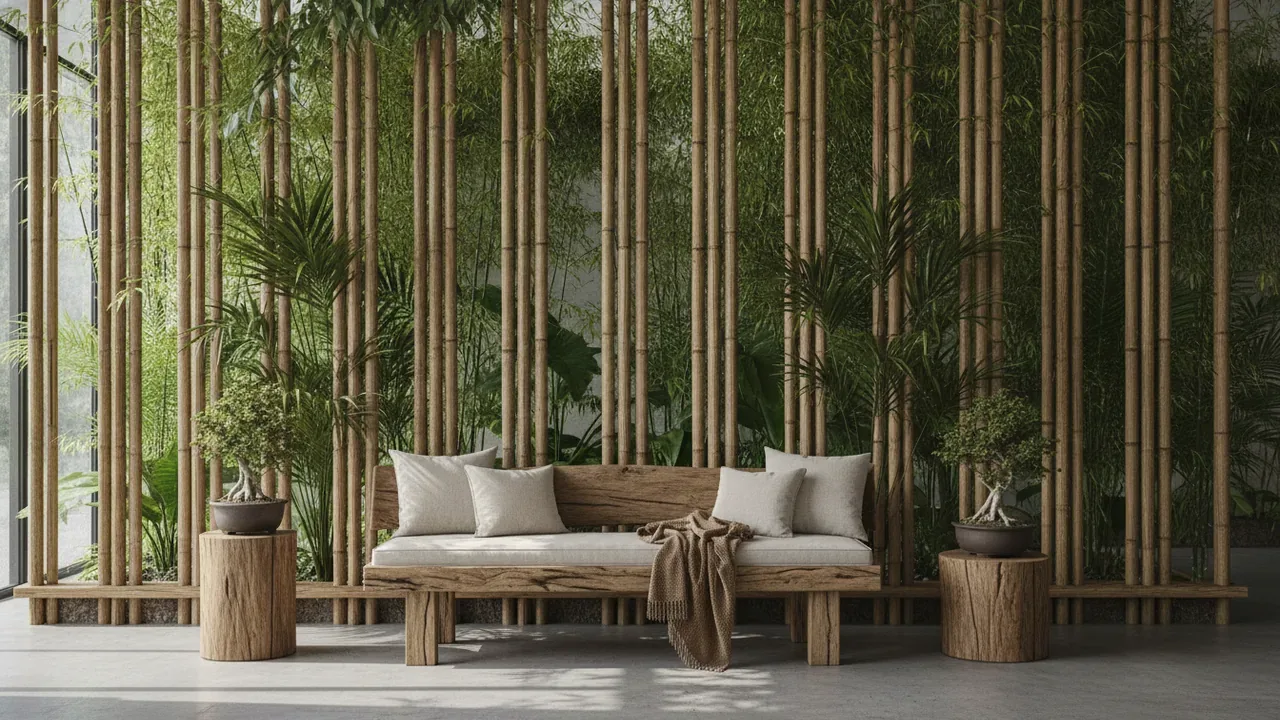
In a Bengaluru home, bamboo earns its place first in the elements you can see and maintain: screens, pergolas, ceilings, cladding and garden pavilions, where its warmth and lightness show and any wear is easy to catch. These are the uses we reach for most.
For a primary structural frame, a bamboo house that holds up the roof and floors, we design it alongside a bamboo specialist and a structural engineer rather than treating it as in-house structural work. Bamboo also sits naturally next to other honest materials like reclaimed wood, and a home can use each where it works best rather than forcing one material to do everything.
What does building with bamboo cost?
Bamboo can be inexpensive as a raw material, but treatment and skilled labour change the picture, so there is no single rate and no honest per-square-foot figure that fits every project. We scope it against the specific use and site. Book a free 45-minute consultation to talk through where it fits your project.
Approvals, insurance and lending for bamboo homes in India can also need extra groundwork, which a professional should walk you through early. Bamboo in construction is one option within a wider palette of sustainable building materials and techniques AD Studio 9 works with, and the right use for it in your Bengaluru home is the one that plays to what the material does best.
Frequently Asked Questions
What is a bamboo building?
A bamboo building is a structure that uses bamboo poles and panels for its frame, walls, screens or roof, either as the main structure or as cladding and detail. It ranges from a garden pavilion to a full house, and it relies on treated bamboo and joinery detailed to keep the poles dry.
What are the disadvantages of bamboo houses?
The real disadvantages are pests, damp and fire. Untreated bamboo is eaten by borers and rots when wet, it burns without fire detailing, and its natural variation makes structural work specialist. Treatment, a dry raised foundation and skilled joinery manage all three, which is why detailing matters more than the bamboo itself.
Is bamboo better than plywood?
Neither is simply better; they suit different jobs. Engineered bamboo boards are hard, dimensionally stable and renewable, and they wear well on floors and surfaces. Plywood is cheaper, easier to source and simpler to work. The right choice depends on the use, the budget and how much you value a renewable material.
How many years does a bamboo house last?
It depends on treatment and detailing more than on the bamboo. Treated, kept dry and raised off the ground, a bamboo house serves for decades; untreated or exposed to damp, it can fail in a few years. The lifespan is set by care and a dry, well-detailed design, not by a single fixed figure.
What materials are used in bamboo construction?
The core material is treated bamboo poles, alongside woven bamboo mats, split-bamboo panels and engineered bamboo boards. These pair with steel connectors and bolts at the joints, a raised masonry or concrete plinth to keep bamboo dry, and a roof that carries a generous overhang for rain protection.
How much does 1 kg of bamboo cost?
Raw bamboo is cheap by weight, but weight is the wrong way to price a build. What drives cost is treatment, transport, skilled joinery and the design, not the kilogram rate of the poles. We scope a bamboo element against its use and site rather than a material rate, in a free consultation.