A jaali is a perforated screen that filters light and pulls air through a wall. Its geometric openings cut glare while keeping a room bright and naturally cross-ventilated. On the terrace of our Drink N Dine project in Bengaluru, we set a clay jaali partition that screens the space and lets the evening breeze move straight through.
What is a jaali, and what does the word mean?
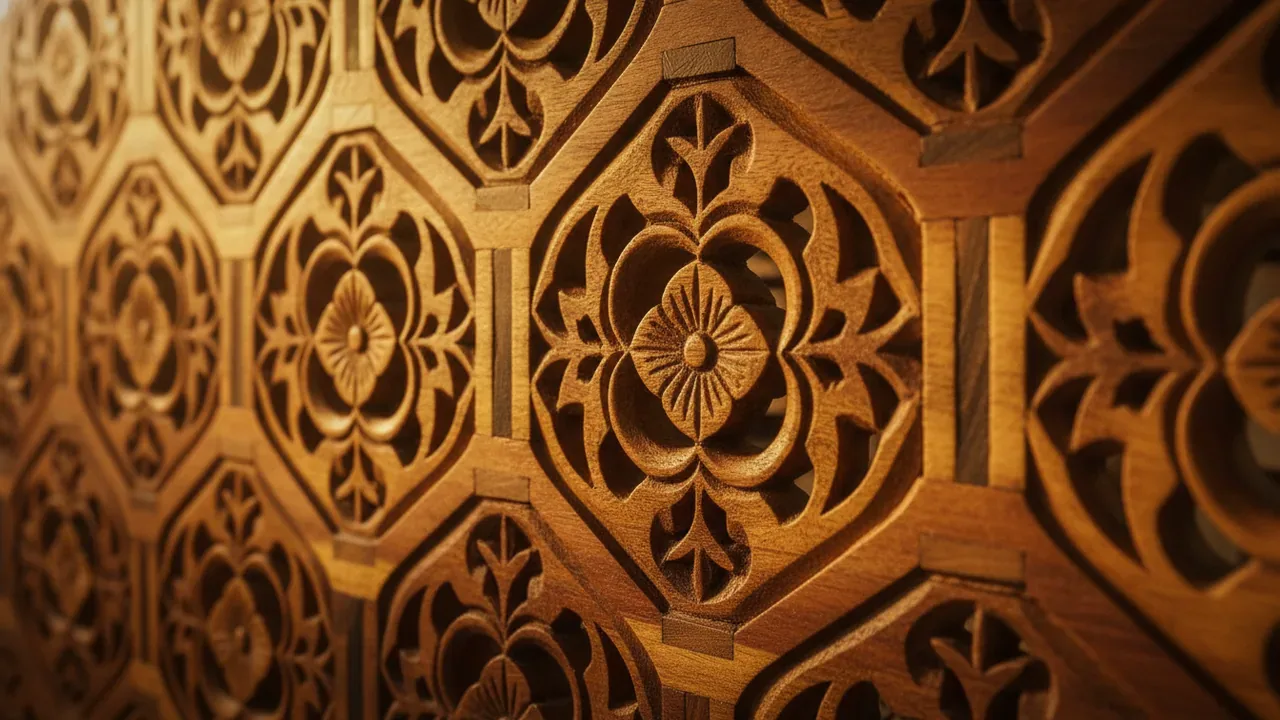
A jaali is a perforated stone, wood, brick, terracotta or metal screen cut with a repeating geometric pattern. The word comes from the term for net. It filters daylight and lets air pass through a wall, and it took its most detailed form in Indian temple and Mughal architecture.
Historians trace the screen to Indian temple architecture, where craftsmen later refined and popularised it under the Mughals. The Islamic world shaped its own close cousin, the mashrabiya, a carved wooden screen used for the same light, air and privacy. A jaali does two things a solid wall cannot: it holds privacy while keeping a room open to light and air. That combination is why a jaali is one of the first moves in designing a nature-connected home, where the walls themselves do the work of light and ventilation instead of machinery.
How does a jaali cool and ventilate a room?
A jaali cools a room by speeding air up as it passes through its small openings, so even a light breeze registers indoors, while the same openings cut direct sun and glare but keep the space bright. It gives one-way privacy: you see out, but little is seen in.
The effect is straightforward physics. When moving air is pushed through many small holes, it accelerates on the way through, so a screen can turn a faint outdoor breeze into a noticeable draft inside. Architect Yatin Pandya has described this behaviour in reported work on jaalis, and studies of lattice screens document the same principle as a tool of sustainable architecture. The openings that pass air also break up direct sun, so you read filtered daylight and moving shadow across a floor instead of glare and heat. A jaali is one of the oldest forms of passive cooling, working long before mechanical air-conditioning existed.
Measured studies of perforated screens report meaningful drops in indoor temperature behind a jaali compared with an open or glazed opening, alongside the drop in glare. The exact figure depends on the screen, the opening size and the orientation.
Jaali materials compared: stone, terracotta, brick, wood and metal
Stone, terracotta, brick, wood and metal each make a different jaali. Stone and terracotta hold heat out and read as handcrafted; brick jaalis build the screen into the wall itself; wood suits interiors; laser-cut metal and cast GFRC give precise modern patterns. The right choice depends on where the screen sits and the climate it works in.
| Material | Where it works best | Character | Bengaluru note |
|---|---|---|---|
| Stone / sandstone / marble | Facades, boundary walls, screens facing sun | Handcrafted, heavy, holds heat out | Excellent for west and south faces |
| Terracotta / clay | Facades and partitions in warm climates | Earthy, breathable, low embodied energy | Suits humid Bengaluru; see terracotta jaali |
| Brick | Structural screen walls, courtyards | Screen built into the wall itself | Good for boundary and stair walls |
| Wood | Interior partitions, window screens | Warm, fine detail, indoor use | Keep out of direct rain and sun |
| Metal (laser or CNC) / GFRC | Modern facades, precise repeat patterns | Sharp, thin, exact geometry | Specify a finish that resists monsoon |
Clay and terracotta deserve a note of their own in a warm, humid city. A terracotta jaali breathes, carries low embodied energy and ages well outdoors, which is why our own Drink N Dine partition uses clay rather than metal.
Where jaalis are used: facades, partitions, windows and boundary walls
Jaalis work as facades, internal partitions, window screens and boundary walls. As a partition, a jaali divides a room without closing it off, holding light and air across both sides. On our Drink N Dine terrace, a clay jaali partition separates the seating while the breeze and evening light pass straight through.
Drink N Dine is a three-level restobar we designed in Bengaluru around 2021 to 2022, with each floor built for a different crowd. The terrace pairs raw pinewood, unfinished concrete and exposed brick with greenery, and the clay jaali does the quiet structural work of the space: it defines the seating zone, keeps sightlines soft, and lets the evening air move without a single fan. That is a jaali doing its full job in a real project, not a render.
Designing a jaali for a Bengaluru home
For a Bengaluru home, the opening size and the screen’s opacity matter more than the pattern. A warmer, more humid climate suits larger openings and a more open screen than the tight jaalis of dry Rajasthan, and orientation decides how much sun the screen has to cut.
We start from the site, not the drawing. A west or south face that takes hard afternoon sun wants a denser screen and deeper openings; a shaded east face can stay lighter and more open. The gap between the jaali and any glass behind it forms a small buffer that carries heat away, so the screen and the wall work as a pair. Where a jaali sits at a window or a courtyard edge, we treat it as part of the whole approach to natural light and ventilation rather than a decorative add-on. That is the difference a practitioner makes: the same pattern can cool a room or bake it, depending on size, depth and which way it faces.
What does a jaali cost?
A jaali’s cost depends on the material, the intricacy of the pattern and the span it has to cover, so there is no single rate. We scope it against the room and the site. Book a free 45-minute consultation to talk through options for your home.
A hand-cut stone screen and a laser-cut metal panel sit at very different price points, and a full facade costs more than a single partition. Large spans also need an engineering assessment for structural sign-off, which we build into the plan. A jaali is one technique in a wider palette of sustainable building materials and techniques AD Studio 9 works with, and we detail each jaali for its exact spot in a Bengaluru home.
Frequently Asked Questions
What does jaali mean?
Jaali comes from the term for net, and that is exactly what the screen behaves like: a fine web of stone, wood, brick, terracotta or metal cut with a repeating geometric pattern. The openings let daylight and air pass through a wall while holding privacy, which is why the word and the object have stayed linked for centuries.
What is the jaali pattern?
A jaali pattern is the repeating geometric cut that forms the screen, built from geometry such as stars, hexagons, florals or interlocking lattices. The pattern sets how much light and air pass through: tighter patterns give more shade and privacy, opener ones give more airflow and brightness. Form and performance are the same decision.
What is the jaali method?
The jaali method means building a perforated screen instead of a solid wall so a space keeps light, air and privacy at once. A pattern is cut or cast into stone, brick, terracotta, wood or metal, then set as a facade, partition, window screen or boundary wall. The openings do the cooling and shading.
Which jali is best?
There is no single best jaali; the right one depends on where it sits and the climate around it. Stone and terracotta suit sun-facing outdoor screens, brick suits structural walls, wood suits interiors, and laser-cut metal suits precise modern facades. For a warm, humid Bengaluru site, breathable clay or stone usually works hardest.
Does a jaali suit a Bengaluru home?
A jaali suits a Bengaluru home well, because the city’s warm, breezy climate is exactly what a perforated screen is built for. Larger, more open patterns move air and cut glare without trapping heat. The screen has to be sized and oriented to your specific site, which is the part we work out with you before anything is cut.