Laterite is a red, iron-rich building stone cut soft from the earth that hardens in the open air. It stays naturally cool and lets walls breathe, which is why homes across coastal Karnataka, Goa and Kerala have used it for generations. Here is how laterite performs in a home, and where it works best.
What exactly is laterite? And what is laterite as a building material?
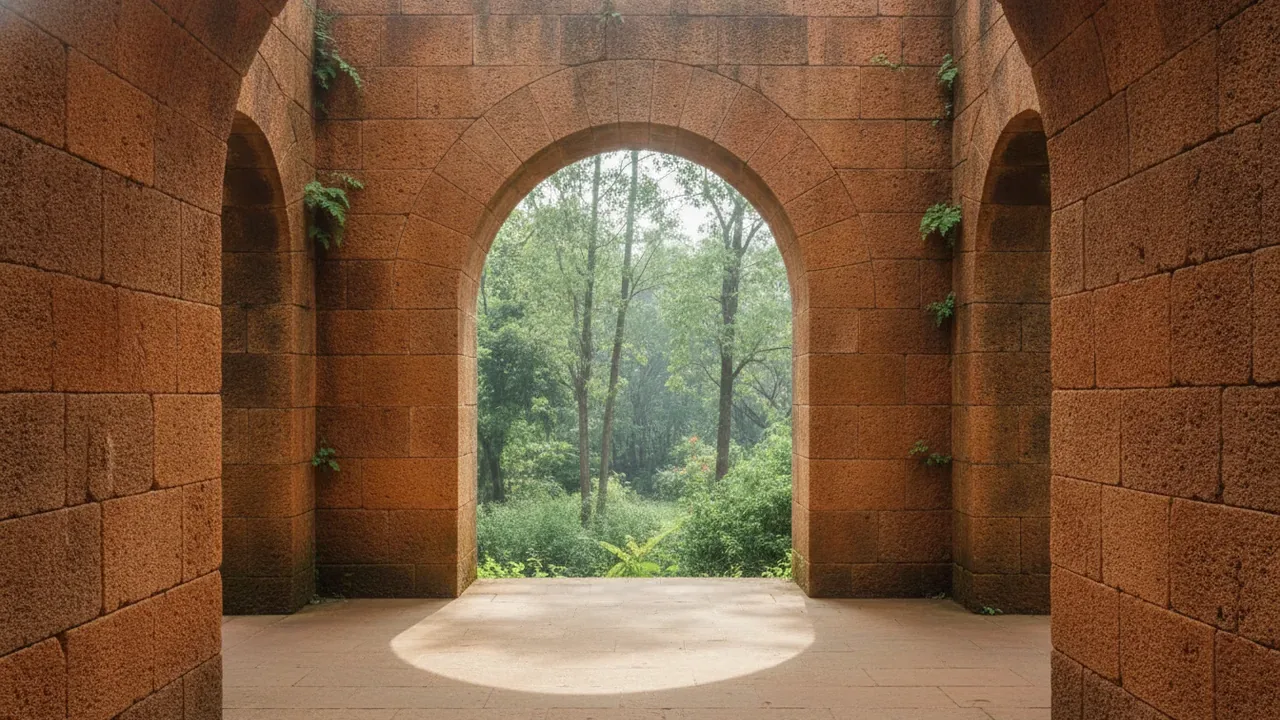
Laterite is an iron-rich stone formed by the intense weathering of tropical ground. It is cut soft from the earth and hardens as it dries in the open air. As a building material it is used as blocks, bricks and cladding, valued for a cool, porous wall and a low-energy, earthy character. It is the building stone, not laterite soil.
The colour comes from iron and aluminium compounds left behind as tropical rain leaches other minerals out of the ground over long periods, per geological sources. That is also why quality varies from one quarry to the next. Freshly cut, the stone is soft enough to shape by hand; exposed to air it firms up into a usable block. Long before it had a name in a materials catalogue, coastal builders were quarrying it straight out of the ground on site.
One clarification worth making early. The exact phrase Laterite House is also a villa brand on the west coast, and laterite soil is a separate topic in farming and geology. This guide is about laterite the stone, the material you build walls and cladding from.
Why laterite keeps a home cool?
Laterite keeps a home cool because the stone is porous, so the wall breathes and slows heat moving through it. Like other light, open-structured natural materials, it does not trap and radiate heat the way dense, sealed surfaces can. In a warm climate, that makes a laterite wall a genuinely comfortable, low-energy way to hold temperature down indoors.
This is the same physics we design around in Bengaluru, where the goal is comfort without leaning on air conditioning. Our own RR Nagar AD Studio, Akshara Vinyasa, runs AC-free through peak summer using porous, breathing surfaces, shade and cross ventilation. Laterite is not what we used there, but it belongs to the same family of thinking, which is exactly the lens we bring to eco-friendly architecture in Bengaluru. A cool material only works when the whole envelope is designed to support it.
What are the benefits of laterite stone houses?
Laterite stone houses stay cooler, cost less in embodied energy, and carry a distinct earthy character. The stone needs little processing beyond cutting, so it is a low-energy choice. Its breathing walls suit humid heat, it can often be reused across building cycles, and left exposed it gives a home a grounded, hand-cut look that needs no paint or applied cladding.
Builders in the Konkan and coastal Karnataka have leaned on these qualities for a long time, according to regional architectural accounts. The material is quarried close to where it is used, which keeps transport low. It ages into a warm, weathered surface rather than looking tired. And because a laterite block is simply cut and dried rather than fired, its production footprint is far lighter than a kiln brick or a cement block.
What are the disadvantages of laterite?
Laterite has three honest drawbacks: it is porous, its strength is limited, and its quality varies. Because it absorbs water, exposed walls need protection or a finish where rain is heavy. Its compressive strength is lower than fired brick or concrete, so it is not for high-rise or large unsupported spans. Stone from different quarries differs, so it must be tested and sourced with care.
None of this rules laterite out. It sets the rules for using it well. Where a wall faces driving monsoon rain, it wants a protective finish or a generous overhang. Where loads are high or spans are long, the structure has to be worked out with a structural engineer rather than assumed, because the safe answer depends on the actual stone and the actual building. Treat those as design constraints, not deal-breakers, and laterite performs.
Where laterite works: blocks, walls and cladding
Laterite works best as cut blocks for low load-bearing walls, as infill within a framed structure, and as cladding on a facade. Across coastal Karnataka, Goa and Kerala it has long built homes, compound walls and public buildings. Used within its strength limits and protected where exposed, it serves as both a structural and a decorative material.
The most common modern use is facing: a thin laterite skin over a conventional structure, which gives the earthy look without asking the stone to carry heavy loads. For single-storey and low walls, cut blocks can do structural work directly, as generations of coastal homes show. The choice between the two is a structural and budget question, decided per site, which is where an architect and engineer earn their place.
| Factor | Laterite block | Fired clay brick | Concrete block |
|---|---|---|---|
| Embodied energy | Low (cut, air-hardened) | High (kiln-fired) | High (cement) |
| Thermal comfort | Cool, breathing wall | Moderate | Warmer, less porous |
| Compressive strength | Lower, varies by source | Higher, consistent | High, consistent |
| Water behaviour | Porous, protect if exposed | Absorbs, needs finish | Low porosity |
| Best use | Low walls, cladding | General walling | Structural walls, frames |
| Look | Earthy, hand-cut | Uniform red | Plain grey |
The table above sets laterite against the two materials people usually compare it with. Read it as a guide to fit, not a scoreboard: each material wins in a different situation, and the right pick follows the wall, the climate and the load.
What is the lifespan of laterite? And can it be reused?
Sources describe laterite as long-lasting and reusable, with well-built structures standing for over a century. Because a block is cut and dried rather than fired or bonded with cement, it can often be taken down and reused in a new wall. Real lifespan depends on protection from constant water and on the quality of the stone, so detailing and sourcing decide the outcome.
Treat the reuse quality as a real advantage rather than a slogan. A laterite block that has done a century of service in one wall can be recovered and set again, which is rare among common walling materials. The condition attached to that longevity is simple: keep constant water off the exposed face, and start with sound stone. Meet those and laterite easily outlasts many materials marketed as more modern.
What does building with laterite cost?
The cost of building with laterite depends on four things: how far the stone travels from the quarry, whether you use structural blocks or thin cladding, the finish you specify, and local labour skilled in cutting and laying it. Close to a source it can be economical; far from one, transport dominates. We scope it against your actual site, not a headline rate.
We do not publish a per-square-foot rate for laterite, because the honest number depends on sourcing distance, the amount of structural versus facing work, and the labour available for it. For a real figure on a real project, the useful step is a free 45-minute consultation where we look at your site, the design intent and the sourcing options together, then cost it properly.
How we think about materials like laterite
We weigh any material against two questions before it goes on site: does it suit the climate, and does the structure hold. For a stone like laterite that means checking cooling behaviour, water exposure and load against the actual building, then deciding where it earns its place. Deciding whether laterite belongs in your home is a climate and structure question first.
This is how we approach every material in a Bengaluru project, from the breathing surfaces in our own studio to the stone or earth a particular home calls for. The value an architect adds is not a preference for one romantic material. It is the judgement to match the right material to the right wall, protect it correctly, and get the structure signed off. Laterite rewards that discipline, and disappoints without it.
If you want that judgement applied to your own home, start with a conversation about the site and the climate, not a material picked from a catalogue. That is the work, and laterite is one good option among several we would weigh for you.
Related reading on this site: our sustainable materials guide ·
FAQ
What exactly is laterite?
Laterite is an iron-rich stone formed by the weathering of tropical ground. It is cut soft from the earth and hardens on exposure to air. It is porous, naturally cool, and has been used across coastal Karnataka, Goa and Kerala as a building material for generations.
What is laterite building material?
As a building material, laterite is used as cut blocks, bricks and cladding. It is valued for its low embodied energy, cool porous walls and earthy look, and is typically used for low walls and facing rather than tall, heavily loaded structures.
What are the disadvantages of using laterite?
Laterite is porous, so exposed walls need protection against driving rain. Its compressive strength is lower and varies by source, so it is not suited to high-rise or large unsupported spans without engineering review. Quality differs between quarries, which makes careful sourcing and testing important.
What is the lifespan of the laterite stone?
Well-detailed laterite buildings have stood for over a century, and many sources describe the stone as reusable across building cycles. Lifespan depends on protection from constant water and on the quality of the stone, so a good finish and sound sourcing matter more than the material alone.
What is the difference between laterite soil and laterite stone?
Laterite soil and laterite stone come from the same tropical weathering process but are used differently. Laterite soil is a loose ground material discussed in farming and geology. Laterite stone is the cut, air-hardened block used to build walls and cladding. This guide is about the building stone.