Reclaimed wood is timber salvaged from an earlier life, old beams, rafters, doors, and floors, then de-nailed, re-milled, and re-seasoned for reuse. In Bengaluru homes it usually means old teak and rosewood rescued from demolished houses: warm, seasoned, dense, and lower in impact than fresh timber, provided it is treated for the local climate before it goes in.
Most of what ranks for reclaimed wood is either a product to add to cart or a generic global explainer. The part that matters for your home is the one nobody covers: how it works in an Indian interior, how it handles Bengaluru’s monsoon and borers, and what it really costs. That is what this page is for.
What is reclaimed wood?
Reclaimed wood is timber recovered from a previous use and reprocessed for a new one. Salvaged wood is pulled whole from old structures, beams, rafters, doors, and floorboards. Recycled wood is broken down and remanufactured, for example into particleboard. The reclaimed timber prized in interiors is salvaged, kept intact, and re-milled so its age and grain still read.
That distinction matters when you brief a designer. Salvaged boards keep the marks of their first life: the saw kerf, the bolt holes, the surface a hundred monsoons wore in. Recycled wood loses all of that in the grinder. Reclaimed wood also sits within a wider family of sustainable materials that Bengaluru studios specify for warmth and lower environmental load.
Where does reclaimed wood come from in India?
In India, reclaimed wood is mostly old teak and rosewood salvaged from demolished houses, heritage buildings, and old factories or godowns. Decades of service in a former roof or door leave this timber dry, dense, and dimensionally settled. Supply is irregular and tied to what comes down, so no two batches match, which shapes how you design with it.
Timber traders and reclamation specialists note that old-growth teak from decades-old structures tends to be denser and more dimensionally stable than fast-grown new plantation timber, because it grew slowly and has already done most of its moving. That is the real draw of Indian reclaimed wood: not nostalgia, but a settled, workable material with a grain that new stock cannot match.
What are the benefits of reclaimed wood?
Reclaimed wood brings two things new timber cannot. First, character: nail holes, saw marks, patina, and grain that only decades of use produce. Second, stability: timber that has already seasoned for years moves less once it is installed. On the environmental side, reusing salvaged timber avoids fresh logging and carries lower embodied impact than new wood.
Reference sources on reclaimed lumber, including Wikipedia’s entry on the subject, note that reusing salvaged timber reduces demand for newly felled trees and lowers embodied carbon compared with new timber. Green-rating systems such as LEED also recognise reclaimed or salvaged content toward their credits, according to green-building sources. For an Indian home, the design payoff is more immediate: one weathered teak beam or a reclaimed-wood door sets a tone a whole room borrows from.
What are the disadvantages of reclaimed wood?
Reclaimed wood asks for more patience than new stock. Boards vary in width, colour, and moisture, so you plan around imperfection rather than uniformity. Old boards hide nails, screws, and bolt holes, and some older coatings contain lead, so both are removed before the wood goes in. Supply is inconsistent, and good material takes time to find.
There is also more waste. Each board is graded, and the unusable lengths are cut away, so a batch yields less finished timber than the same volume of new stock. None of this rules reclaimed wood out. It just means you commission it earlier, accept some variation as the point rather than a flaw, and work with a maker who processes it properly.
Is reclaimed wood cheap?
No. Reclaimed wood is not a budget material. Salvaging, de-nailing, re-milling, re-seasoning, and grading each board takes real labour, and good old teak is scarce, so quality reclaimed wood tends to cost more than new timber, not less. What you pay depends on four things: species, prior use, condition, and how much processing a batch needs.
Because those factors swing so widely from one salvage lot to the next, no honest rate card exists for reclaimed wood. Anyone quoting a flat figure sight unseen is guessing. At AD Studio 9, cost is set on consultation once the material and the job are clear, and the studio offers a free 45-minute consultation to work through scope, species, and options before anyone commits to a number.
Does reclaimed wood suit Bengaluru’s climate?
Yes, once it is treated for the local climate first. Bengaluru’s monsoon humidity and year-round borer and termite pressure mean reclaimed wood needs anti-borer and anti-termite treatment, the correct moisture content, and sealing before it goes in. Old teak handles this well after treatment. Keep it out of constantly wet zones unless it is fully protected.
The practical sequence is simple: check moisture with a meter, treat against borers and termites, acclimatise the boards to indoor humidity, then seal. Skip any of those and the same beautiful beam becomes a borer meal by the second monsoon. This is ordinary climate-responsive discipline for a Bengaluru home, the same logic that guides choices like climate-responsive terracotta facades on the exterior.
How to design with reclaimed wood in a home
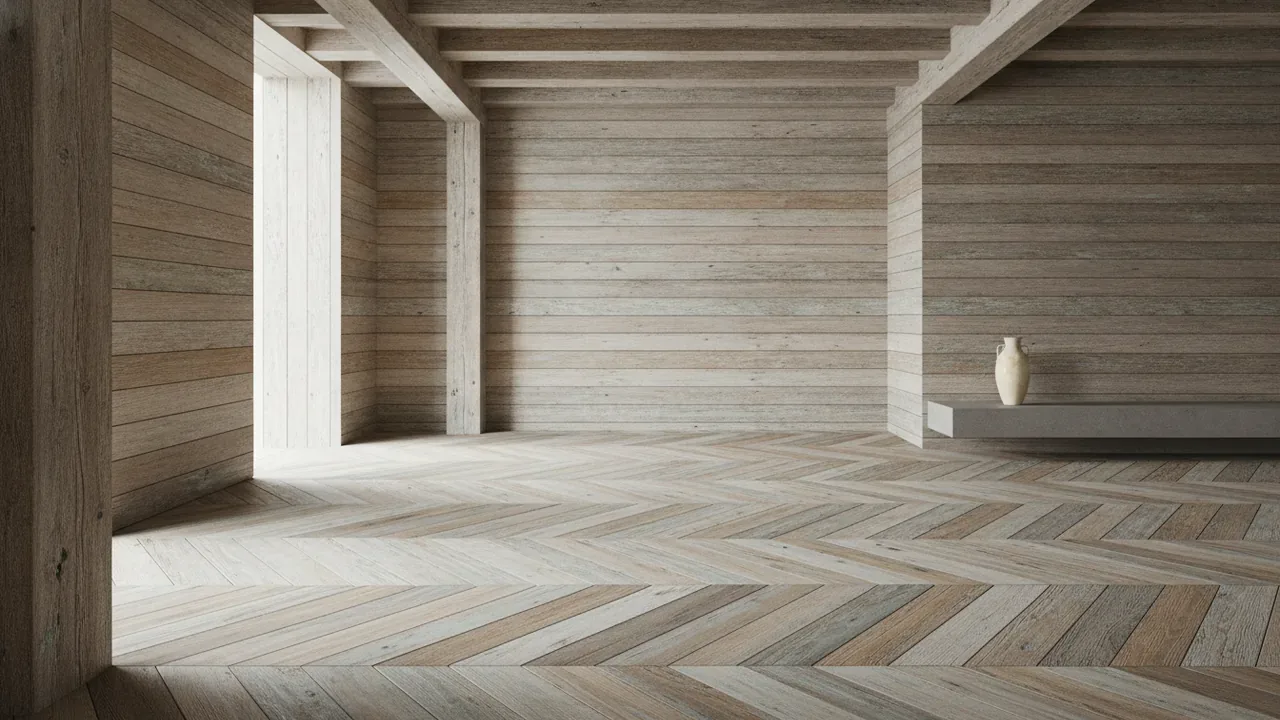
Reclaimed wood works best where its character reads as intentional: a feature cladding wall, exposed beams and rafters, solid doors and frames, joinery, and furniture. It suits flooring in dry, low-traffic rooms. It struggles across large uninterrupted floors that need colour uniformity, in wet areas, and as unregraded structural spans. Match the board to the job and it earns its place.
The judgement is knowing where a salvaged teak beam belongs and where it will quietly fail. One reclaimed element usually anchors a room best, a single clad wall or a run of doors, set against calmer, plainer surfaces so the grain has room to speak. That same instinct, choosing materials for light, air, and the local climate as much as for looks, is what goes into designing a nature-connected home in Bengaluru, and it is the register Ar. Apoorva Lekha works in at AD Studio 9.
Where to source reclaimed wood in Bengaluru
In Bengaluru you find reclaimed wood through timber yards that carry salvaged stock, demolition and salvage contractors, architectural-salvage and antique dealers, and specialist makers who work only in old teak. Provenance and quality vary from source to source, so verification is not optional. Buy on evidence, not on a good story about where a board came from.
Before you commit to a lot, do four checks: measure moisture content, confirm the anti-borer and anti-termite treatment, ask what the timber was in its first life, and inspect every board for embedded metal. Sourced with that care and treated properly, reclaimed wood gives a Bengaluru home a warmth and a settled character that new timber cannot buy.
Frequently asked questions
Is reclaimed wood good quality?
Often it is very good. Reclaimed old teak and rosewood come from slow-grown, old-growth trees, so the timber is dense, tight-grained, and already seasoned, which means it moves less than new plantation wood. Quality still varies board to board, so each is graded before use. Treated correctly for Bengaluru’s climate, good reclaimed wood outlasts much new stock.
Is reclaimed wood safe to use indoors?
Yes, once it is checked and prepared. Salvaged boards arrive with embedded nails or screws, and some carry old paint or coatings that contain lead. A proper process removes the metal, strips or seals those finishes, and treats the wood against borers and termites. After that, reclaimed wood is safe and stable for indoor flooring, cladding, doors, and furniture.
Can reclaimed wood be used for flooring in Bengaluru?
Yes, in the right rooms. Reclaimed teak makes durable, warm flooring for living and sleeping areas once it is treated against borers and termites, brought to the correct moisture content, and sealed. Acclimatise the boards indoors before laying them. Keep reclaimed-wood floors out of bathrooms and other constantly wet zones unless the timber is fully protected.
Where can I buy reclaimed wood near me in Bengaluru?
Look to Bengaluru timber yards that carry salvaged stock, demolition and salvage contractors, and architectural-salvage dealers. Always verify moisture, treatment, and provenance before buying. If you are weighing reclaimed wood against other warm, low-impact options for floors and surfaces, handmade Athangudi tiles are worth comparing before you decide.