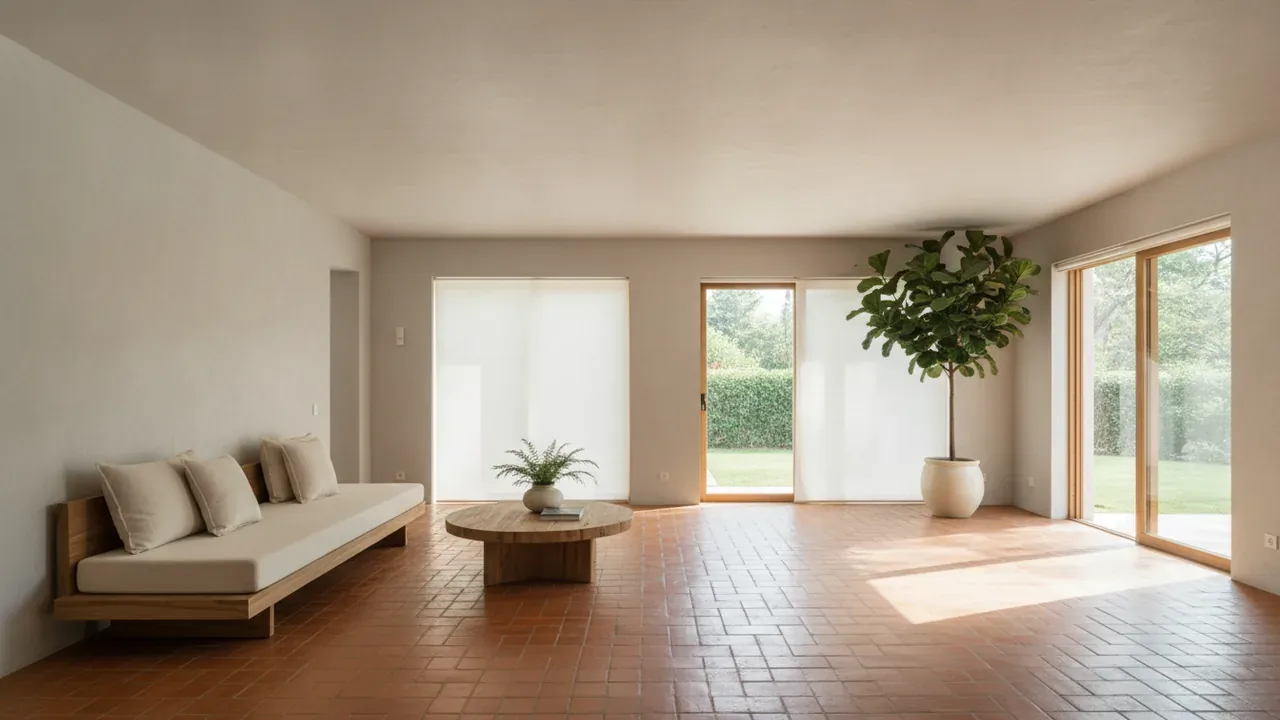
Oxide flooring is a seamless cement floor coloured with iron-oxide pigments, also known as Indian Patent Stone. It is hand-troweled in place, sealed, and polished to a soft sheen that stays cool underfoot and ages into a patina. It suits warm Bengaluru homes for its calm, earthy surface and its low-energy, vernacular make.
This guide covers what oxide flooring is, how it is laid, the colours, the real pros and cons, what it costs, how long it lasts, and whether it belongs in your home. The drawbacks get the space most guides skip, because that is where the decision actually gets made.
What is oxide flooring?
Oxide flooring is the everyday name for Indian Patent Stone (IPS), a cast-in-situ cement floor coloured with iron-oxide pigment. Instead of laying tiles or stone, a mason mixes pigment into a cement screed, spreads it over a concrete base, and hand-trowels it to a smooth, continuous surface. There are no tiles and no grout lines, so the whole floor reads as one plane. Red is the traditional shade, but green, grey, and other earthy colours are common.
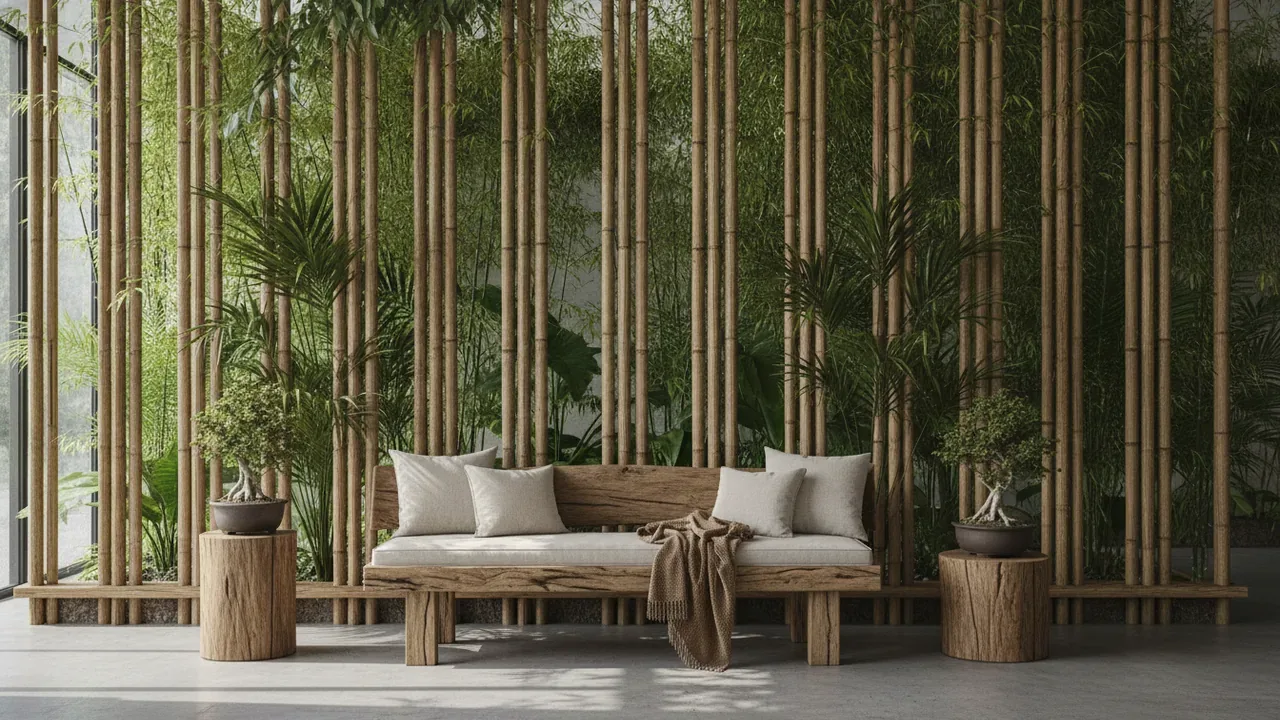
A floor is one decision inside a much bigger one. If you are designing a nature-connected home in Bengaluru, the floor, the walls, and the roof get planned together around light, air, and the local climate, not chosen one product at a time.
How is oxide flooring made?
Oxide flooring is poured, not placed. A plain cement concrete base goes down first and is allowed to set. The mason then mixes cement, fine aggregate, and iron-oxide pigment into a screed, spreads it over the base, and hand-trowels the surface flat and tight. The floor is water-cured for days, then sealed and waxed and buffed to bring up the sheen. The colour runs through the wearing layer, so it does not sit on top like paint.
Technical references for IPS put the pigment at roughly 2 to 5 percent of the cement, laid as about a 1:1.5:3 cement mix over a 3 to 4 inch plain cement concrete base, with the finished layer commonly between 25 and 150 mm thick. The exact mix and thickness are set on site for the base and the use, which is why a steady, experienced hand matters more here than with a dry-laid tile.
Oxide flooring colours: red, green, grey and more
Red oxide is the classic, a warm terracotta-red that has floored Indian homes for generations. Green oxide reads cool and calm and pairs well with timber and plants. Grey oxide is the contemporary, neutral choice. Yellow, blue, and near-black are made too, though they are less common and can be harder to keep even.
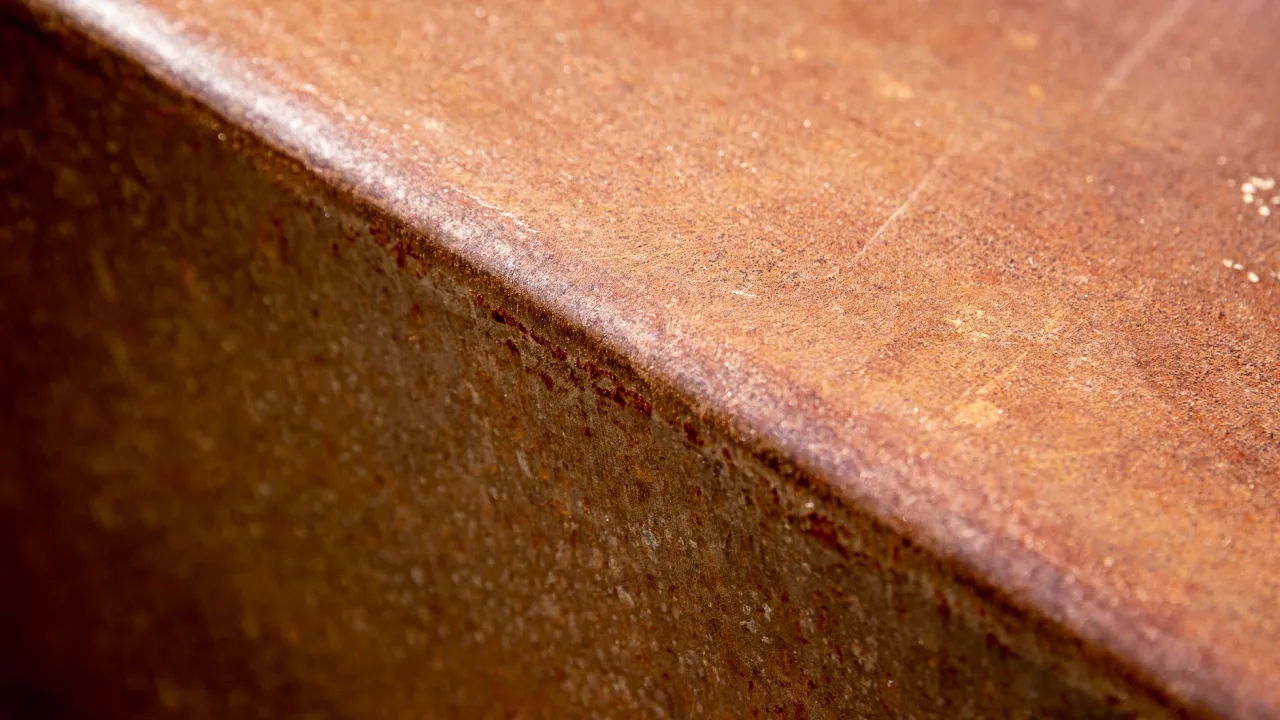
The shade depends on three things: the pigment, how much of it goes in, and the cement it is mixed with. Grey cement deepens and mutes a colour; white cement lets it read cleaner and brighter. Because it is a handmade, batch-mixed finish, expect gentle variation across a large floor. That variation is part of the material’s character, not a fault to chase out of it.
Is oxide flooring good? Pros and cons
Oxide flooring is a good floor for the right home and the right owner. It gives you a seamless surface with no grout lines to scrub, it stays cool underfoot in the heat, it carries a low material footprint, and it ages into a patina that most owners grow to like. It is also repairable: a worn floor can be re-buffed rather than ripped out.
The trade-offs are real and worth knowing before you commit. Oxide is porous and needs sealing. It develops fine surface cracks. It depends heavily on the skill of the mason, and the colour will vary a little across the floor. None of these rule it out. They simply decide whether oxide is the right call for your home, which the next section unpacks in full.
What are the disadvantages of red oxide flooring?
Sellers tend to soft-pedal the downsides. Here they are straight, because designing around them is the whole job.
- It develops hairline cracks. Cement shrinks as it cures and the slab beneath it moves, so fine surface cracks are normal over time. They are almost always cosmetic, part of a living floor’s character, not structural failure. Good base curing and proper detailing keep them minor, but you should expect some.
- It is porous and stains if unsealed. Oxide absorbs water, oil, and spills until it is sealed and waxed. An unsealed floor will mark. It needs an initial seal and a periodic wax to stay stain-resistant, which is maintenance you sign up for.
- It lives or dies by the mason. Hand-troweling a flat, even, blemish-free surface takes an experienced craftsman. An inexperienced crew leaves trowel marks, patchy colour, or a weak top layer. This is the single biggest reason an oxide floor disappoints.
- Colour varies across the floor. It is batch-mixed by hand, not factory-printed, so shade can shift across a large area. If you want perfect uniformity, oxide is the wrong material.
- Repairs are visible. A patch rarely matches the aged surrounding floor exactly, so damage tends to show until the whole surface is re-buffed.
- It is slower to lay. Oxide is a wet, cured process, so it takes longer than dry-laid tiles and the room is out of use while it cures.
Treat cracking, patina, and gentle colour shift as the signature of a handmade material, seal and maintain it on schedule, and an oxide floor rewards you for decades. Expect a flawless, factory-uniform surface and it will let you down.
Is oxide flooring cheaper than tiles? What it costs
Oxide flooring is often cheaper than mid-range vitrified tiles and far cheaper than natural stone, because the material is mostly cement and pigment and the real cost is skilled labour. Where tiles add the price of the tile plus the laying, oxide is largely the craftsmanship and the base.
Industry listings commonly quote oxide flooring in the region of Rs 30 to 70 per square foot depending on finish and region. Treat that as a market reference for context, not a quote. What a specific floor costs depends on the floor area, the condition of the base slab, the finish and number of coats, and the skill and rate of the mason.
AD Studio 9 does not price floors by the square foot. We scope a floor as part of the whole project, after seeing the site and the base. If you want to talk it through, we offer a free 45-minute consultation at our RR Nagar studio in Bengaluru.
What is the life of oxide flooring? Care and maintenance
Maintained well, an oxide floor lasts decades. The maintenance is light but it is not optional. Seal the floor on completion, then wax and polish it periodically, anywhere from every few months to once a year depending on traffic. Damp-mop for daily cleaning and keep harsh acids off it. When the sheen dulls, a re-buff brings it back.
The floor genuinely improves with age. The patina deepens, the surface softens, and a well-kept oxide floor in an old Bengaluru home often looks better at thirty years than a tiled floor does at ten. The bargain is simple: a little upkeep in exchange for a long, graceful life.
Oxide flooring vs IPS, vitrified tiles and marble
Oxide flooring and the plain IPS technique are the same family: IPS is the broader cast-in-situ cement floor, and oxide is the coloured, decorative version of it. Against tiles and stone, the differences come down to seams, feel, cost, and how the floor ages.
| Factor | Oxide flooring | Plain IPS | Vitrified tiles | Marble |
|---|---|---|---|---|
| What it is | Pigmented cast-in-situ cement | Plain cast-in-situ cement | Factory-fired tiles | Natural stone slabs |
| Look | Seamless, coloured, earthy | Seamless, utilitarian grey | Uniform, printed finishes | Veined, premium |
| Underfoot in summer | Cool | Cool | Warmer | Cool |
| Joints | None | None | Grout lines | Slab joints |
| Relative cost | Low to mid | Low | Mid | High |
| Cracking risk | Some hairline cracks | Some hairline cracks | Low | Can chip / etch |
| Maintenance | Periodic sealing / wax | Low | Very low | Sealing / polishing |
| Best for | Warm, earthy, crafted homes | Service areas, budget floors | Uniform, low-upkeep floors | Premium stone character |
Choose oxide when you want colour and a crafted, seamless floor. Choose plain IPS when you want the same cool cement floor without the decorative finish. Tiles win on uniformity and low upkeep. Marble wins on natural-stone character and budget headroom.
Does oxide flooring suit a Bengaluru home?
For many Bengaluru homes, yes. The climate here is warm by day and mild at night, and a seamless cement floor that stays cool underfoot does quiet work in a home designed to stay comfortable without leaning on air-conditioning. It is barefoot-friendly, it suits earthy, plant-filled interiors, and its low material footprint fits a low-energy home.
This is the lens AD Studio 9 brings to floors. We design climate-responsive homes around material authenticity, and vernacular cement finishes like IPS sit naturally in that vocabulary. We read passive cooling first-hand: our own RR Nagar studio, Akshara Vinyasa, runs without air-conditioning through peak Bengaluru summer using a drip-irrigated terracotta facade and passive design. That same climate-first thinking decides which floor, wall, and roof a home actually needs.
A floor choice is the small end of that conversation. When you plan a climate-responsive home with us, the surfaces are chosen for how the house breathes, the same care that runs through our recent residential work in Bengaluru, including a recent Nagarbhavi residence.
Frequently asked questions
Is oxide flooring good?
Oxide flooring is a good choice for a warm, earthy home where you want a seamless, cool, low-energy floor and you accept light upkeep. It has no grout lines, ages into a patina, and can be re-buffed rather than replaced. It is porous and develops fine cracks, so it rewards good sealing and a skilled mason.
Is oxide flooring cheaper than tiles?
Oxide flooring is usually cheaper than mid-range vitrified tiles and much cheaper than natural stone, because the material is mostly cement and pigment and the main cost is skilled labour. The saving depends on the base, the finish, and the mason’s rate, so the gap varies by project rather than being fixed.
What is the cost of oxide flooring?
Market listings commonly place oxide flooring around Rs 30 to 70 per square foot depending on finish and region, which is a reference rather than a quote. The cost of a specific floor depends on the area, the base condition, the finish, and labour skill. AD Studio 9 scopes floors on consultation, not by the square foot.
What is the life of oxide flooring?
A well-maintained oxide floor lasts decades. It needs sealing on completion and periodic waxing and polishing, with a re-buff when the sheen dulls. The patina deepens with age, so an oxide floor often looks better after many years than it did when new, provided the upkeep stays on schedule.
What are the disadvantages of red oxide flooring?
Red oxide flooring is porous and needs sealing, develops fine hairline cracks as the cement cures, and depends heavily on the mason’s skill for an even surface. Colour varies a little across a hand-mixed floor and repairs can show. Designing and maintaining around these traits keeps an oxide floor performing for decades.