Mangalore tile roofing
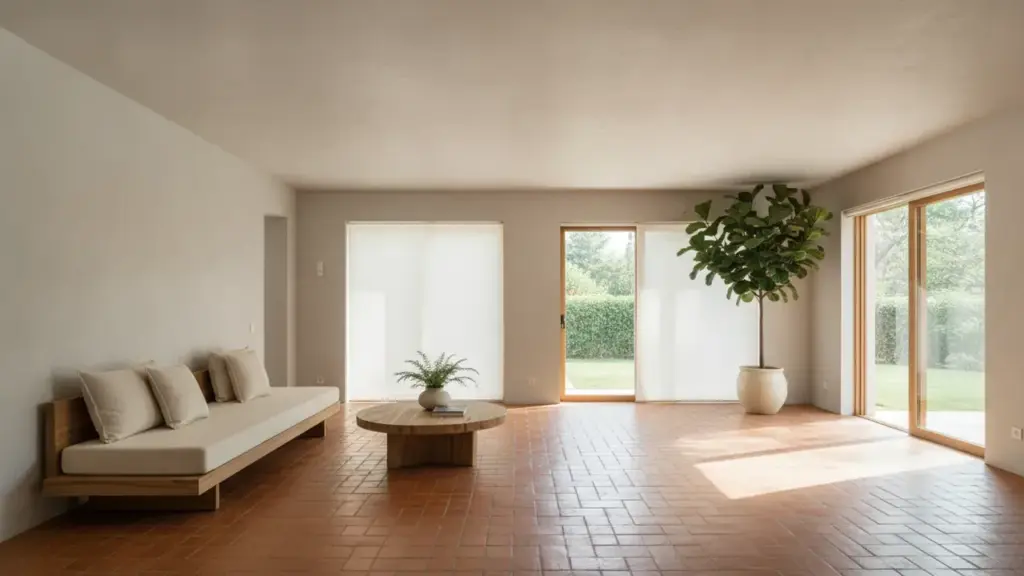
Mangalore tiles are curved, interlocking clay roof tiles first made on the Karnataka coast. Laid across a sloping roof, they lock into a leak-proof surface that sheds monsoon rain, lets the roof breathe and holds a Bengaluru home cooler under the sun. They perform through overlap, last for decades when they are maintained, and suit […]
Bamboo in construction

Yes, you can build with bamboo in India, and people have for centuries. Bamboo construction uses treated poles and panels for structure, screens, cladding and roofs, from garden pavilions to full homes. It is renewable and strong for its weight, but it needs the right species, treatment and detailing to last. The honest question is […]
Reclaimed wood in interiors
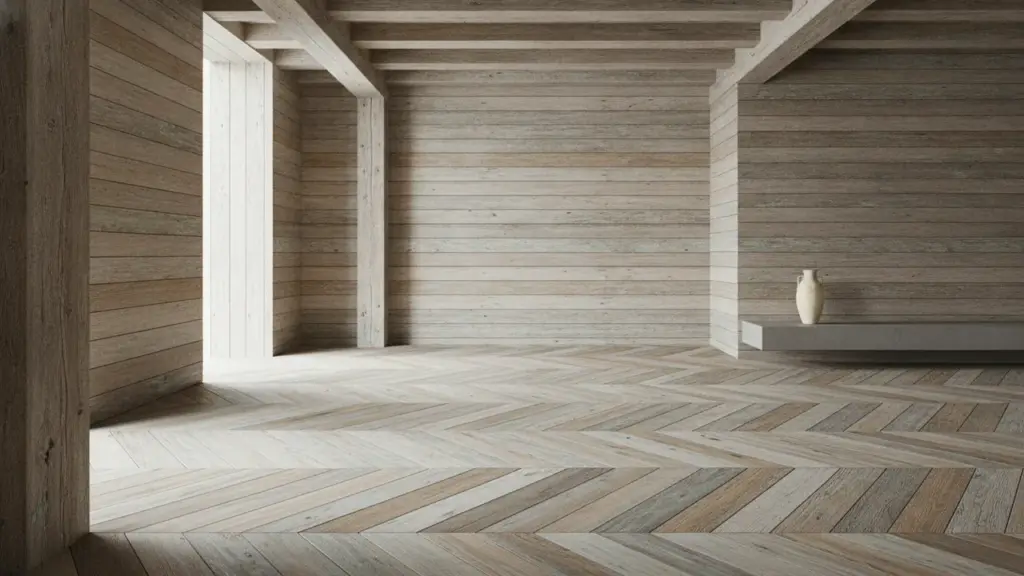
Reclaimed wood is timber salvaged from an earlier life, old beams, rafters, doors, and floors, then de-nailed, re-milled, and re-seasoned for reuse. In Bengaluru homes it usually means old teak and rosewood rescued from demolished houses: warm, seasoned, dense, and lower in impact than fresh timber, provided it is treated for the local climate before […]
Jaali design: light & airflow
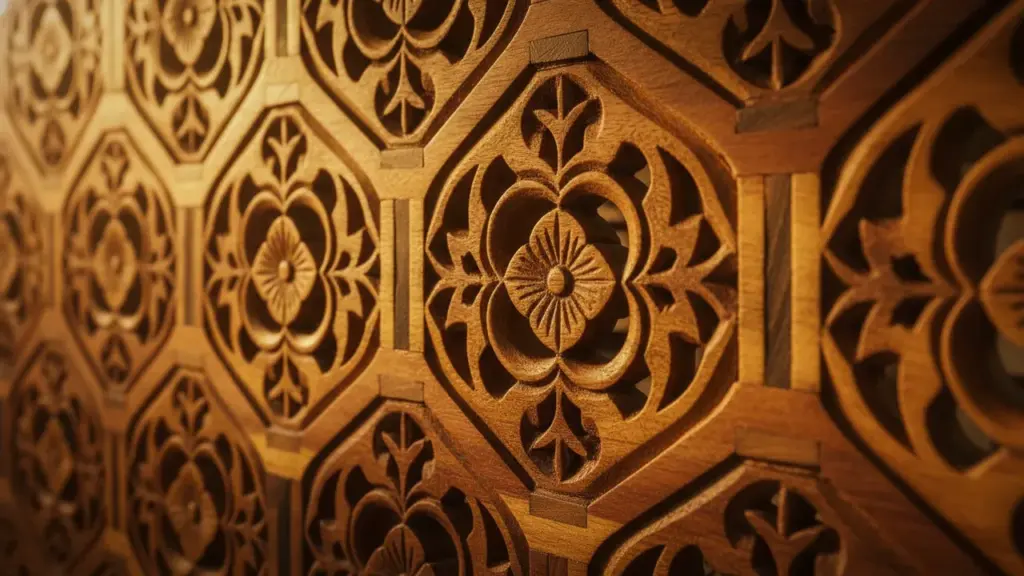
A jaali is a perforated screen that filters light and pulls air through a wall. Its geometric openings cut glare while keeping a room bright and naturally cross-ventilated. On the terrace of our Drink N Dine project in Bengaluru, we set a clay jaali partition that screens the space and lets the evening breeze move […]
Laterite Stone Homes: A Bengaluru Architect’s Guide
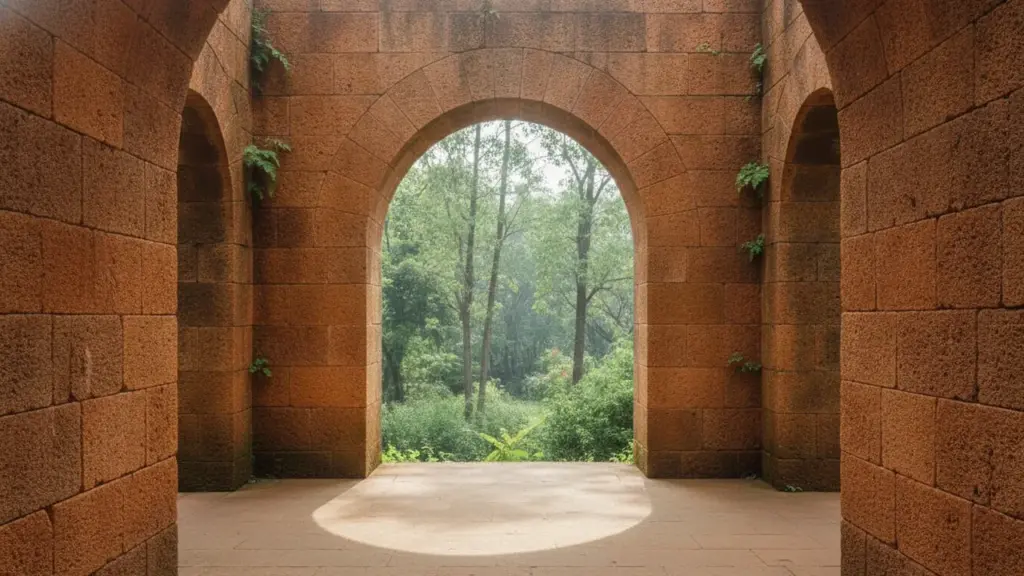
Laterite is a red, iron-rich building stone cut soft from the earth that hardens in the open air. It stays naturally cool and lets walls breathe, which is why homes across coastal Karnataka, Goa and Kerala have used it for generations. Here is how laterite performs in a home, and where it works best. What […]
Kota Stone Flooring: An Architect’s Guide for Bengaluru Homes
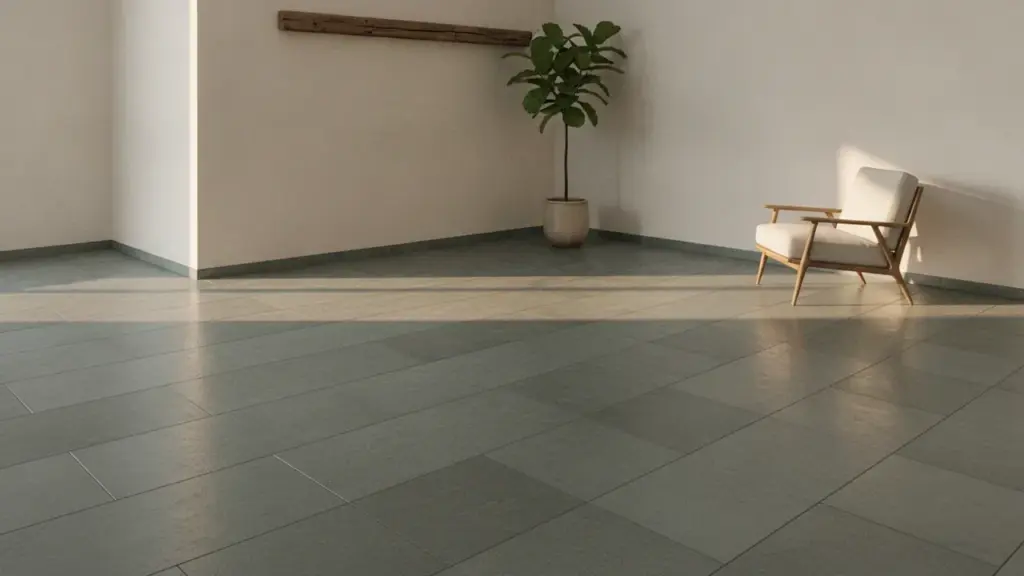
Kota stone is a fine-grained limestone from Rajasthan, valued for staying cool underfoot and holding up to years of hard use. In our own RR Nagar studio, Akshara Vinyasa, we laid it on the Architect’s-cabin balcony for exactly that reason: a grounded, naturally cool surface that sits well with Bengaluru’s climate. Here is how it […]
Terracotta facades & jaali
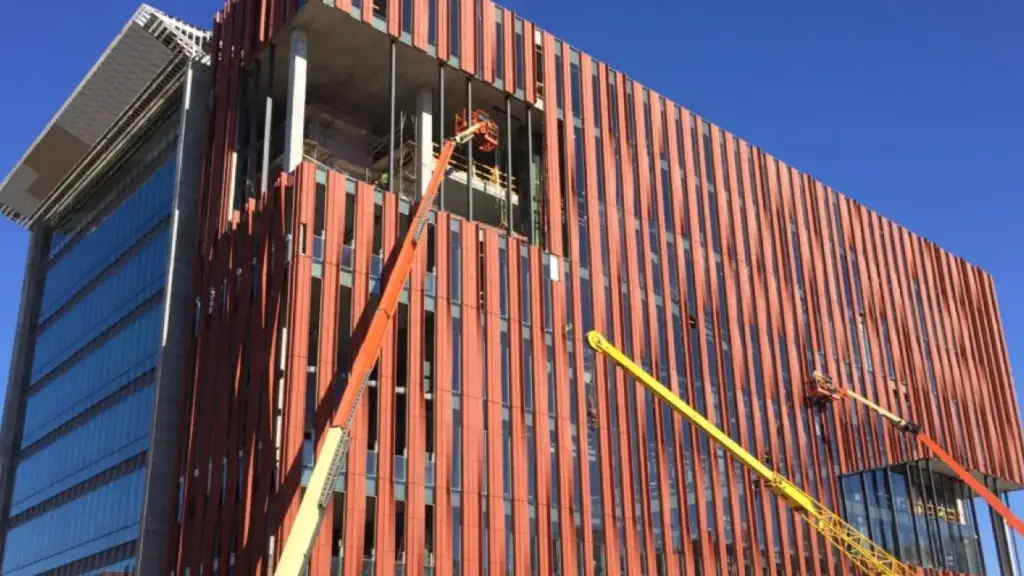
A terracotta facade is a skin of fired clay that shades and cools a building while giving it a warm, textured face. It works through thermal mass, a ventilated cavity behind the clay, and shade. At our own RR Nagar studio, Akshara Vinyasa, a drip-irrigated terracotta wall keeps the building comfortable through peak Bengaluru summer […]
Rat trap bond brickwork explained
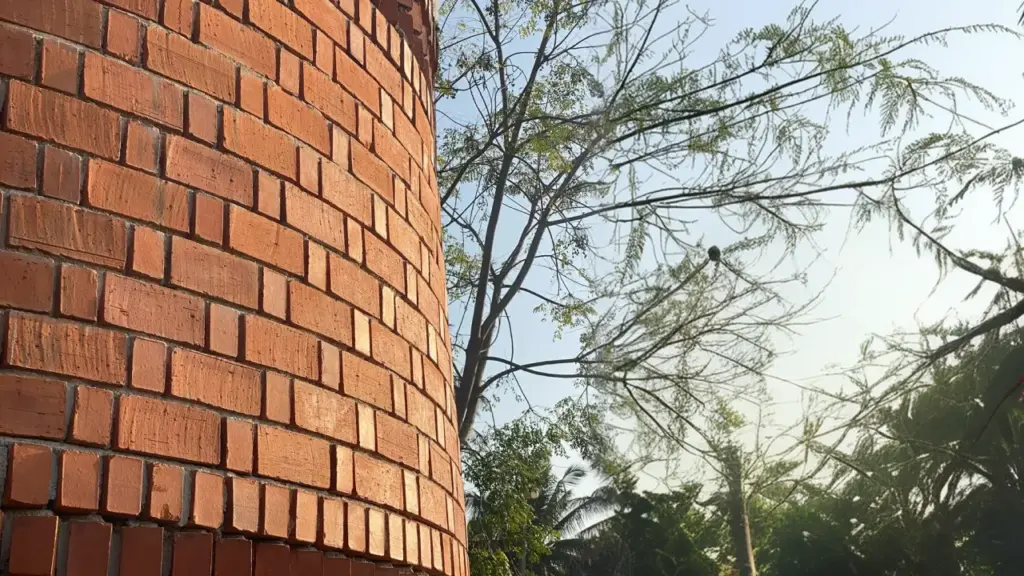
Rat trap bond is a brick masonry technique where bricks are laid on edge to leave a hollow cavity inside the wall, cutting brick and mortar use by about 30% and trapping air that keeps interiors cooler. Popularised in India by architect Laurie Baker, it suits Bengaluru’s warm climate when the site and the masonry […]
Lime wash: a natural wall finish
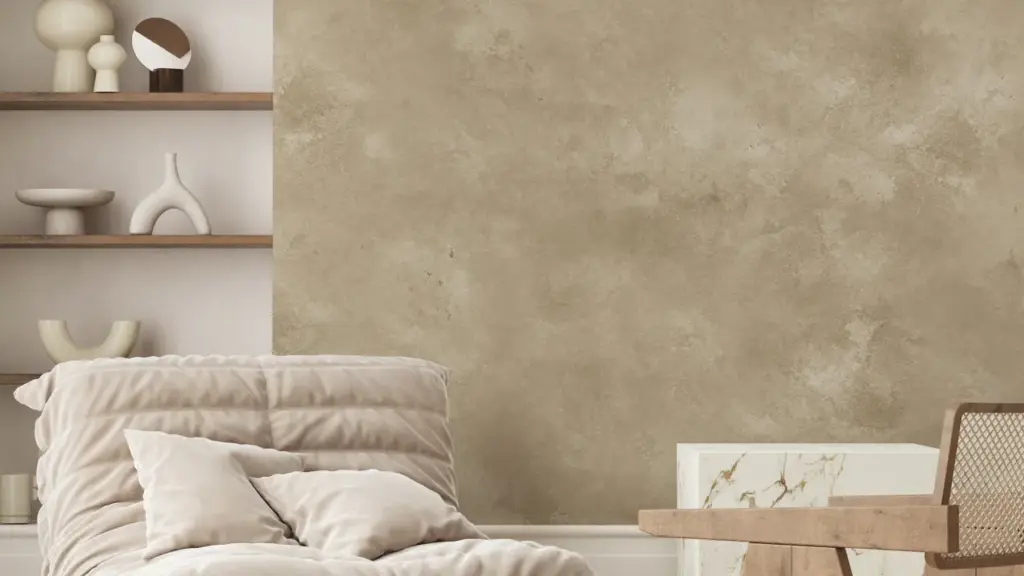
Lime wash is a natural wall finish made from slaked lime and water that soaks into porous walls and hardens into a soft, chalky, matte surface. It breathes, resists mould, and ages into a mottled patina instead of peeling, which is why a breathable lime finish suits humid Bengaluru walls better than a sealed plastic-emulsion […]
Rammed earth walls explained
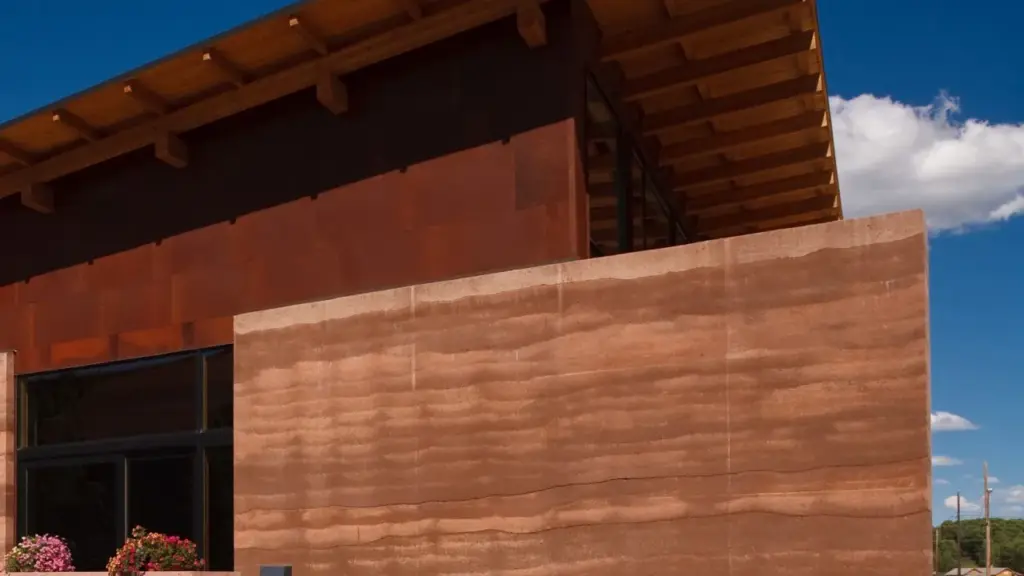
Rammed earth is a wall technique that compacts damp soil, sand, gravel, and clay in layers inside formwork until it cures into a dense, load-bearing wall. It needs no plaster, stores heat through the day, and gives a striated, earthen finish. Whether it suits a Bengaluru home depends on your site, your soil, and how […]